What Roof Repair Involves on a Colorado Home
Roof repair is targeted work: stop water where it enters, then restore the components that carry it away. On most homes along the Front Range, that means replacing torn underlayment, resetting lifted flashing, and sealing penetrations before the decking underneath rots.
- Asphalt shingles — three-tab shingle, architectural shingle, and heavier impact-rated products from GAF, Owens Corning, and CertainTeed.
- Synthetic underlayment replacing old roofing felt or tar paper, with ice-and-water shield run along the eave where ice dam backup starts.
- Step flashing and counterflashing rebuilt at every wall, dormer, and chimney the roof plane meets.
- Pipe boot and vent boot seals, which crack from UV long before the shingles do, swapped as a set.
- Drip edge, ridge cap, and ridge vent, keeping water off the fascia while the attic breathes at the ridge line.
- Roof cement and mastic used only as a detail sealant at a joint, never as a shortcut around proper flashing.
- Valley metal and apron flashing set before the field shingles go down, since the valley carries the most water on the roof.
- Decking repair where rot has spread into plywood or OSB sheathing, a rafter, a joist, or a truss member.
Roof Repair Reaches Every Roofing Material on Your Block
Denver's housing stock runs from Victorian-era bungalows with wood shake to mid-century brick ranches and post-war split-levels, and each one fails differently. We repair the material actually on your rooftop instead of selling a system that fits a different house.
- Wood shake and cedar shake roofs shed water well until the shakes split and cup, letting water wick into the felt beneath.
- Slate, clay tile, and concrete tile are brittle — one cracked tile opens a path, though the underlayment usually ages out first.
- Metal panel and standing-seam panel roofs fail at fasteners backing out of the purlin; corrugated panel loses its washers to UV.
- Low-slope and flat sections use membrane systems — TPO, EPDM, or PVC membrane — plus built-up roof and modified bitumen, where seams and ponding do the damage.
- Historic tar and pitch roofs on older buildings get patched with compatible bitumen, never coated with a product that will not bond.
Signs You Need Roof Repair Before the Next Front Moves In
Water rarely shows up where it came in. It seeps along the sheathing, wicks down a rafter, and stains a ceiling ten feet from the actual gap. These are the signals we ask homeowners to check after every hailstorm and hard freeze.
- Granule loss shows as sand in the gutter and downspout — the shingle has shed its protective surface and is oxidizing.
- Brown ceiling stains or a mark at the soffit mean moisture has already wicked through the decking and into the insulation.
- Curling, clawing, or missing shingles at the rake and hip edges point to wind uplift rather than ordinary end-of-life wear.
- Daylight visible through roof boards in the attic means a puncture, split, or gap that hail or a branch opened.
- Ice dams along the eave force meltwater backward under the shingles and into the wall cavity.
- Hail impact cracking in asphalt shingles looks minor from the ground — bruised mat, no visible hole — until spring melt finds it.
- Blistering, alligatoring, or chalking on a membrane means the surface is eroding and the laps are next to delaminate.
- Mold, a musty smell, or a dead attic fan points to trapped ventilation moisture rather than an active leak.
Our Roof Repair Process, Step by Step
A repair is only as good as the inspection behind it. We start on the rooftop and in the attic, then price the work line by line so you can see what each item costs before you approve anything.
- Roof inspection: we walk the rooftop, photograph every penetration, and check the roofline from the ground with a ladder.
- Attic check: we read the roof deck, rafters, and joists from underneath for rot, decay, and moisture content.
- Written roof estimate with line items for tear-off, recover, or overlay, plus decking, materials, and permit fees.
- Building code and permit review — work over 50% of the roof area requires a permit, so we pull it and meet the inspector.
- Decking and substrate repair first, because a new course laid over soft sheathing fails within one season.
- Flashing work: chimney flashing, step flashing, pipe flashing, and boot flashing get hand-sealed, and every open joint gets fresh caulk.
- Installation with ring-shank nails driven to the correct depth — an overdriven fastener tears the mat and voids the warranty.
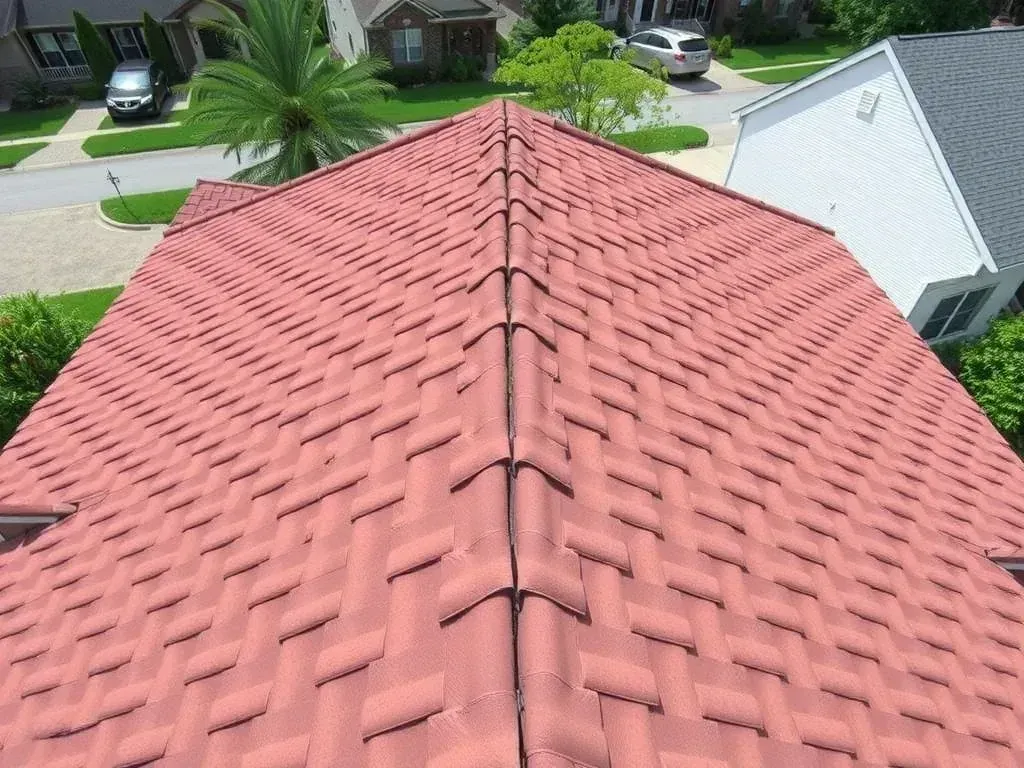
- Starter course, staggered courses, and field course set to the manufacturer's exposure and head lap, then ridge cap and ridge vent last.
- Cleanup with a magnetic nail sweep, debris into the dumpster, and a photo record of every completed detail.
Stripping a section takes a pry bar and a roofing shovel, and deck work takes a nail gun fed by an air compressor. A roofing square and a chalk line keep the new courses true.
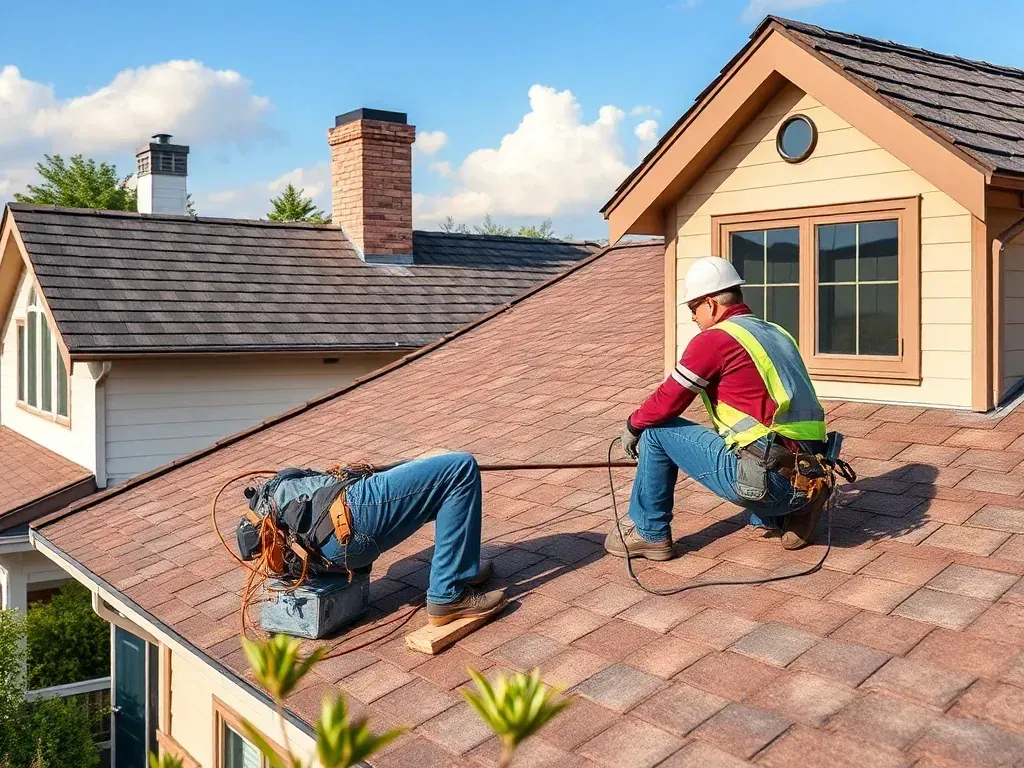
Anything above a 6/12 pitch gets a safety harness anchored into the structure, and a steep overhang gets scaffold instead of a ladder braced on the gutter. A torch comes out only for modified bitumen.
Details That Decide Whether a Repair Lasts
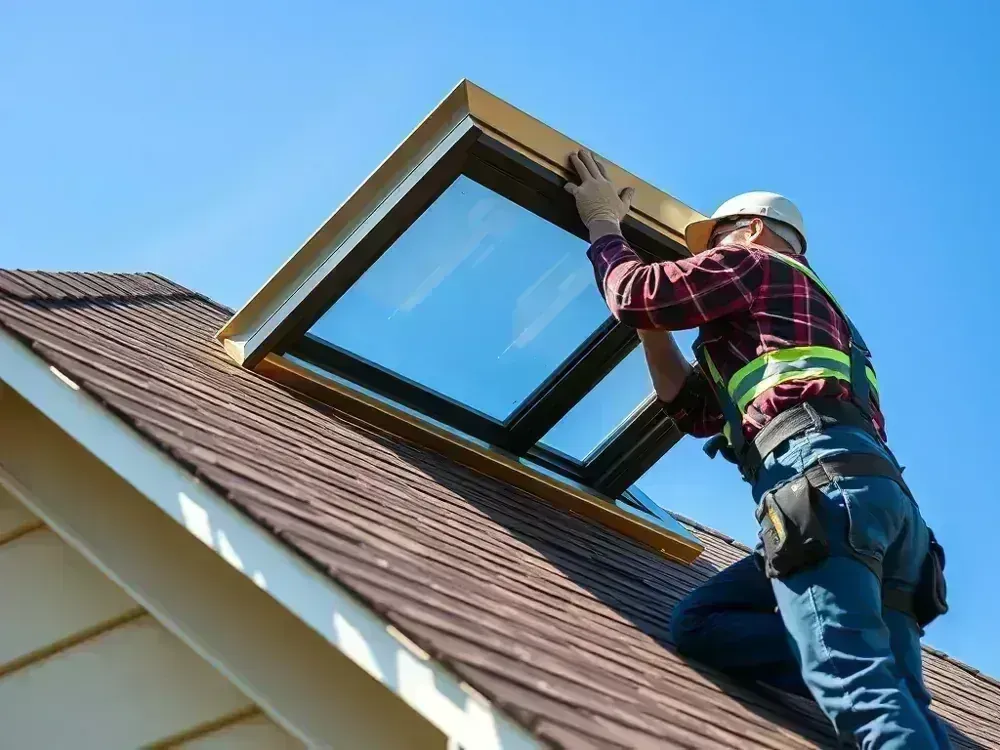
Some details belong to specific rooflines. A mansard or gambrel roof hides a low-slope plane behind a steep face, and that hidden section is where leaks survive longest. A dormer, a skylight, or a canopy and awning over an entry each creates its own joint.
Where a gable meets a lower roof, we check the apron flashing and the verge. Above a walkway or a door on a metal panel roof, we may set a snow guard so a slide does not land on someone.
On commercial and multi-family rooftops we check the parapet and its coping, the scupper that drains it, and any batten or counterbatten supporting a metal panel system. A clogged scupper turns a flat roof into a pond by the next afternoon.
Underneath, we look at the vapor barrier and confirm the soffit vent is not blocked, because ventilation keeps a roof deck dry from the inside. Every visit ends with a water test wherever we can run one, since weatherproofing the detail is the point.
If the attic shows a sagging ridge line, we examine the ridge beam and rafters before blaming the shingles. Material is ordered by the roofing square, so a measurement error costs real money.
What Roof Repair Costs in Denver
Most single-area repairs on a Denver home land between $450 and $1,800, with price driven by access, decking condition, and material match. Repeated failures across several planes often cost less to replace than to keep patching.
- A pipe boot or vent boot reseal typically runs $300 to $650 including sealant and labor.
- Flashing repair at a chimney or sidewall — step flashing, counter-flashing, and caulk — usually falls between $500 and $1,200.
- Shingle replacement over one or two squares, matched to your existing architectural shingle, runs $450 to $1,100.
- Decking replacement adds roughly $150 to $400 per sheet once plywood or OSB, fasteners, and disposal are counted.
- Full tear-off pricing runs per square and includes underlayment, ice-and-water shield, drip edge, and ridge vent.
- Emergency tarping and stabilization is quoted separately and credited toward the permanent repair when you hire us.
- Insurance claims often cover hail and wind damage above your deductible, so the out-of-pocket number is worth checking first.
Warranty Terms and Insurance Claim Help
Workmanship is covered by our own warranty, and the material carries the manufacturer's warranty, which we register in your name. Residential shingle systems typically carry 25- to 50-year limited coverage; commercial membrane systems can be specified with an NDL warranty that drops the dollar limit.
- Storm damage claims start with photos and a written scope before the adjuster inspection, so nothing gets left out.
- We meet the adjuster on the roof and provide a line-item estimate using the same measurements and material codes.
- If the approved insurance scope misses decking, drip edge, or code-required ice-and-water shield, we file a supplemental claim.
- You sign the proof of loss form and we track the storm date, claim deadline, and reserve release paperwork.
- We do not waive deductibles, and we will tell you when a claim is not worth filing.
Why Denver Roofing Team for Roof Repair in Denver
Denver sits at 5,280 feet, and that altitude changes what a roof goes through. UV intensity is higher here, so asphalt oxidizes and shingles lose granules faster than they do at sea level.
Sudden temperature swings drive ice dams at the eave, and the 2017 hailstorm that caused more than $2 billion in damage across the metro is a reminder of what one afternoon of marble-sized hail does to a roofline.
We are a licensed and insured roofing contractor working to local building code, and we explain what we find in plain language before we price anything. As a roofer, the part we care most about is that the work holds through another winter.
If a repair is the right call, we will say so. If the roof is at end-of-life wear, we will show you the photo evidence and the cost of both paths.
Roof Repair Questions Denver Homeowners Ask
How long does roof repair take?
Most repairs finish in a single day, and a larger section usually takes two. If we are waiting on a material match for your architectural shingle, we reseal and tarp that area overnight at no extra charge.
Can you repair a roof in winter?
Yes, with limits. Most sealants will not cure below freezing, so we schedule cold-weather work around the forecast and hand-seal the details that a shingle cannot seal on its own.
Will my insurance cover roof repair?
Hail and wind damage is usually covered above your deductible, while ordinary wear and tear is not. We document the storm date and hand the adjuster a line-item estimate with measurements.
Do you repair flat and commercial roofs too?
We do — TPO, EPDM, and PVC membrane repairs, plus modified bitumen and built-up roof sections, along with metal panel and standing-seam panel work.
Do I need a repair or a full replacement?
If damage is confined to one area and the decking is sound, a repair makes sense. When shingles are failing across several planes, replacement usually costs less than patching it twice.
What Homeowners Say About the Work
"They found the leak at a pipe boot on the back slope, not where the stain was. Repaired it the same week and explained the flashing repair before they started." — Washington Park
"Hail cracked the shingles on our north-facing slope. The photo report was thorough, and the insurance scope got the decking added after their supplemental claim." — Five Points
"Old shake roof on a 1920s bungalow. They repaired the valley and reset the chimney flashing instead of pushing a replacement we did not need yet." — Capitol Hill
Signs You Need Roof Repair
Missing or Loose Shingles
Marble-sized hail and wind uplift knock shingles loose along the rake and ridge, and the nails left behind are no longer holding anything. A single missing shingle in a valley lets water run straight onto the underlayment.
Granules in the Gutters
Intense UV radiation at 5,280 feet oxidizes asphalt faster than at lower elevations, so the shingle sheds its protective surface early. When you see sand in the downspout, the mat is already exposed and curling follows.
Water Stains on the Ceiling
A brown ring on the drywall usually means water has wicked along the sheathing for weeks before it showed. We trace it back to the flashing joint or pipe boot that actually failed rather than sealing the stain.
Daylight Through the Roof Boards
If you can see light through the decking from inside the attic, moisture has rotted the OSB or a puncture opened the substrate. That is a decking repair, not a shingle patch.
Hail Impact Cracking in Asphalt Shingles
Bruised shingles show a soft spot where the mat cracked under the surface, with no visible hole from the ground. Spring melt finds those cracks and turns them into active leaks.
Ice Dams Along the Eave
Sudden temperature swings melt snow on a warm afternoon and refreeze it at the eave overnight, backing water up under the shingles. Ice-and-water shield along the eave is what stops that path, and many older roofs do not have it.
What's Included
- ✓ Free roof inspection with photos of every penetration, flashing joint, and hail strike we find.
- ✓ Written line-item roof estimate covering tear-off, material, decking, and permit costs.
- ✓ Manufacturer warranty registration filed in your name on qualifying shingle and membrane systems.
- ✓ Decking repair in plywood, OSB, rafters, and joists where rot has spread past the substrate.
- ✓ Cleanup with debris hauled off and a magnetic nail sweep run across the driveway and lawn.
- ✓ Permit pulled and inspection met where the work crosses the local building code threshold.
- ✓ Insurance claim assistance, including a line-item scope for the adjuster and supplemental filing when something gets missed.
Related Services
Ready to get started? Call us today at 7207840657 for a free estimate.
☎ Call 7207840657