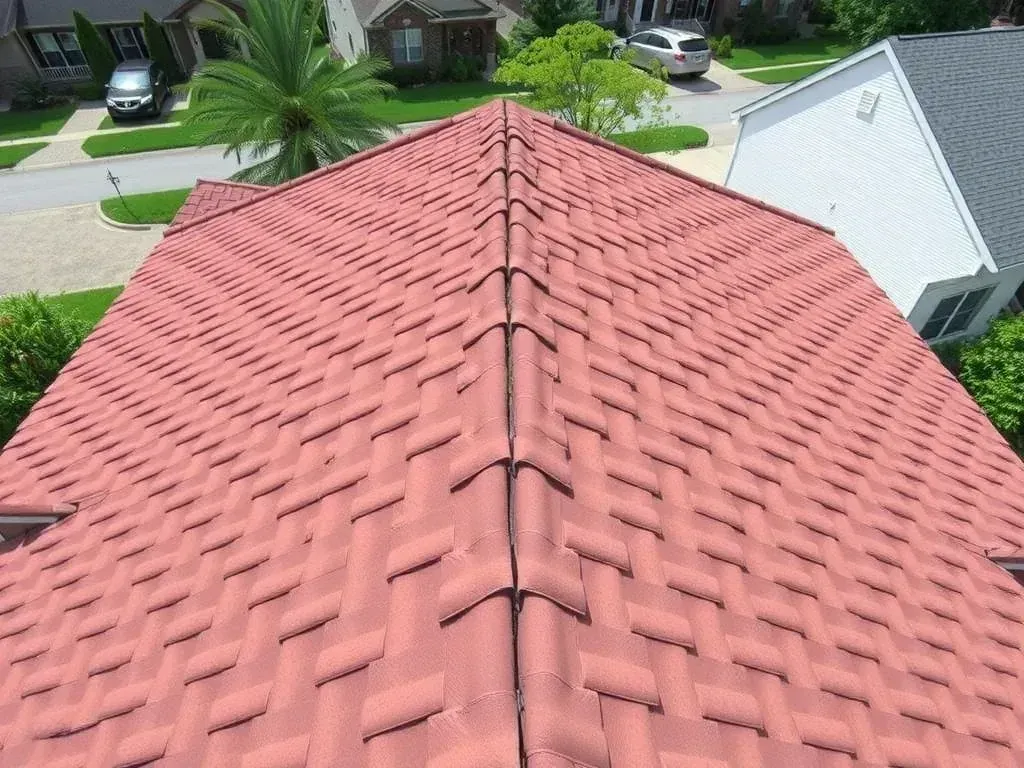
What Hail Damage Repair Involves
Most of the job happens before any shingle moves. Hail bruises the mat of an asphalt shingle, and the bruise hides under a surface that still looks fine from the driveway.
We open test squares, trace how far the impact traveled, then install architectural shingle rated higher for impact than the three-tab shingle it replaces, with synthetic underlayment and ice-and-water shield at the eave.
- Replacement shingles matched to your existing asphalt shingle profile so the repaired slope blends instead of reading as a patch.
- Impact-rated architectural shingle set with ring-shank nails and checked for overdriven fasteners.
- Synthetic underlayment replacing torn roofing felt or tar paper so water cannot wick sideways into the field course.
- Ice-and-water shield, a self-adhered membrane run along the eave and through the valley where meltwater refreezes.
- Replacement decking in plywood or OSB wherever hail-driven water has rotted the roof deck or softened the substrate.
- New drip edge at the rake and eave so runoff leaves the roof instead of curling under the shingle edge.
- Step flashing, counter-flashing, and chimney flashing reset where a strike cracked the sealant and opened a seam.
- Pipe flashing and vent boot collars swapped when hail splits the rubber around a plumbing stack.
How to Tell the Hail Reached the Mat
Damage hides where you cannot see it: under the shingle surface and up in the attic. Walk the lot the morning after a storm and check these before you call anyone.
- Granule loss shows as grit in the gutter and a bald patch on the shingle, leaving the asphalt binder exposed to UV.
- Dented gutters and downspouts are the cheapest hail gauge you own, so check the fascia behind them while you are out there.
- A bruised shingle feels soft underfoot and shows a dark matte spot where the mat cracked below the surface.
- Impact marks on valley metal, vent stacks, and the aluminum around a ridge vent survive for years and help date the storm.
- Brown rings on attic sheathing or insulation mean water is already wicking past a cracked shingle mat.
- Splits along the ridge cap and hip show where wind-driven hail opened a course that looks intact from the driveway.
Will insurance pay for hail damage on my roof?
Most Colorado homeowner policies treat hail as a covered peril, so the work is paid minus your deductible.
We document the storm date, photograph each impact, and hand your adjuster a line-item estimate in the format they already read.
Our Hail Repair Process
We run the same sequence on every storm job, because order matters more than speed. Here is what happens from the first call to the final sweep.
- Rapid damage inspection: we photograph the roof, soft metals, and window screens in one pass and bag a granule sample from each slope.
- Emergency tarping: heavy tarps cover open areas, held with cap nails, battens, and screws so a torn slope stops taking water that night.
- Written scope and adjuster meeting: your roof estimate is written line by line, then we walk the adjuster through it on the rooftop.
- Tear-off and deck check: pry bars and roofing shovels strip the field course, and soft spots in the sheathing get marked and cut out.
- Dry-in: underlayment and ice-and-water shield go down the day the deck is open, so the waterproofing is finished before any shingle lands.
- Install: starter course first, then staggered courses set with a nail gun and checked with a roofing square for exposure.
- Cleanup: a dumpster sits on site for debris, and we run a magnetic sweep over the lawn and driveway before the final walkthrough.
Access, Tools, and Safety on a Storm Job
Storm work means moving fast on wet, steep slopes, so access gets planned before anyone climbs. Each surface gets the tool it wants.
- Ladders and scaffold are set on stable ground, and a safety harness anchors to a ridge point rather than a vent pipe.
- Roofing shovels and pry bars strip material without gouging the decking, and an air compressor blows grit out of the valleys.
- A roofing square and chalk line keep exposure even, and the nail gun runs at the pressure the shingle maker specifies.
- Mastic, roof cement, and a bead of caulk seal small gaps around flashing that a tarp cannot cover.
- A torch is used on modified bitumen seams only, never near shingle, and adhesive follows the membrane maker's spec.
- Coating is reserved for low-slope roofs where the membrane is sound and only the surface has oxidized.
Roof Types We Repair After a Hail Event
Hail hits every surface differently, and what we install depends on what is already overhead. These are the systems we see most.
- Wood shake and cedar shake split along the grain, and hail-driven water then soaks the felt underneath.
- Slate and clay tile crack or spall, so the tile gets replaced and the underlayment below usually needs work too.
- Concrete tile and composite profiles flake at the surface, which means the batten grid under them gets checked.
- Metal panel and standing-seam panel dent, and water gets past the gasket at each exposed fastener.
- Corrugated panel on outbuildings loses its grip when fasteners back out after freeze-thaw cycles.
- Built-up roof and modified bitumen blister where trapped moisture boils under the surface in July heat.
- Membrane roofs, including TPO, EPDM, and PVC membrane, hold up until hail punctures or stresses a seam.
- Tar and pitch roofs on older buildings have oxidized past the point where the bitumen sheds water.
What the Repair Costs in Denver
Pricing follows the damage, not the size of the house. A partial repair usually runs $600 to $1,800, because the work is small but matching and access are not.
A full replacement on a 2,000 square foot roof lands between $9,000 and $18,000, depending on shingle grade, decking condition, and how many layers come off.
Building code and permits add to that number: Denver requires a permit for a full roof replacement, and a second layer means higher disposal cost.
- Slope and access, since a steep pitch or a tall roofline needs scaffold and slower work.
- How many layers come off, because a double tear-off costs more in labor and disposal than a single layer.
- Decking replacement, priced per sheet and usually invisible until the old shingles are off.
- Shingle grade, since impact-rated architectural shingle costs more per square than a standard three-tab shingle.
Roof Shapes and Details That Change the Scope
Two houses on the same block can take identical hail and need different work, because geometry decides where water goes after the strike.
- A dormer or skylight interrupts the field course, so flashing around it gets pulled and reset rather than patched.
- Hip and gable ends catch wind-driven hail at different angles, and a hip roof usually needs more valley and ridge cap work.
- A chimney, canopy, or awning adds a wall-to-roof seam where step flashing, apron flashing, and counter-flashing get rebuilt.
- A parapet with a scupper and coping holds water on a flat roof longer, which is where ponding and seam failure start.
- Overhangs and soffits shelter the eave but collect shattered granules, and the verge at a rake takes the most wind.
- A gambrel or mansard profile hides the lower slope, which is often where the worst bruising sits.
- Rooftop vents and a gooseneck exhaust each need their own boot flashing, and each one is a possible entry point.
Structural Checks Before We Close the Deck
Shingles are the visible layer, and hail rarely arrives alone. We check the frame while the deck is open, since that is the only cheap moment to fix it.
- Trusses, rafters, and the joists at the ceiling line get probed for rot and for how far moisture traveled.
- The ridge beam and any purlin are checked for sag before new material goes on.
- Battens and counterbatten strips under tile or metal get replaced when fastener holes have enlarged.
- Vapor barrier and attic insulation are inspected for wet patches that never dried after the storm.
- Ventilation around a blocked soffit vent or a dead attic fan keeps the roof deck damp, which speeds decay after an impact.
- Ridge vent and pipe flashing are the two spots where we most often find a leak the adjuster missed.
- Snow guards and the ridge anchor go back on steep slopes, since sliding snow can peel a new course off the eave.
Warranty and Insurance on Storm Work
Material coverage comes from the manufacturer and stays with the roof, and our workmanship backs the installation itself. Insurance is where most homeowners need the most help.
- Tarping and board-up are documented as mitigation, so the carrier sees why they were needed.
- We photograph the storm date, impact marks, and soft metals before anything moves on the roof.
- Your roof estimate is written line by line so it can be read against the adjuster's own report.
- We meet the adjuster inspection on the rooftop, where scope and pricing questions get settled in place.
- When the first scope misses decking or flashing, we file a supplemental claim with extra photos attached.
- We register the manufacturer warranty for you and leave the paperwork with the final invoice.
- We never ask a homeowner to waive a deductible, and we decline work where that is the expectation.
Why Denver Roofing Team Handles Storm Claims Here
Denver sits a mile above sea level, and thinner air lets more UV through. A hail bruise on a shingle turns brittle and sheds granules faster here than it would at lower elevation.
Freeze-thaw swings from a 60-degree afternoon to a 20-degree night push meltwater back under flashed edges, so we re-check the weatherproofing at every seam before we leave. We are a licensed and insured roofing contractor, and estimates are free.
Signs You Need Hail Damage Repair
Dented Gutters and Downspouts
Aluminum takes the same hit your shingles did, so a dented gutter run is the fastest read on hail size. Check the fascia behind it too, because that is where water starts finding a way in.
Bruised or Soft Spots on Shingles
A full hail season leaves soft, matte spots you can feel underfoot on a warm afternoon. UV at this altitude turns a bruise brittle within a single season, so the crack widens quietly.
Granules in the Downspout Outlets
Granule loss shows up at the bottom of the downspout before it shows on the roof, because rain washes the grit down. Once the asphalt binder is exposed, the shingle dries and cracks.
Visible Cracks or Divots on the Roof
Marble-sized hail cracks the shingle mat and leaves a divot you can catch a fingernail in. Skylights, ridge caps, and the soft metal of a vent stack show the same pattern.
Cracked Sealant at Flashing and Boots
Hail cracks the mastic around chimney flashing and splits a pipe boot collar. Meltwater then seeps into the deck, and a sudden temperature swing opens the gap wider overnight.
Ice Dams Forming After the Storm
Freeze-thaw cycles push meltwater to the eave, where it refreezes into an ice dam behind a hail-bruised shingle field. That dam backs water up under the courses and into the attic.
What's Included
- ✓ 24-hour response, with a crew dispatched while the storm is still moving through the metro.
- ✓ Emergency tarping over open slopes, skylights, and dormers to stop water at the roof deck.
- ✓ Dated photo documentation of shingles, gutters, downspouts, and soft metals for your insurance file.
- ✓ Board-up or temporary patching where hail has opened a hole or a tree has come through.
- ✓ A written line-item roof estimate you can send to your adjuster before the inspection.
- ✓ Permanent repair scheduled once the claim is approved, using replacement shingles and new underlayment.
Related Services
Ready to get started? Call us today at 7207840657 for a free estimate.
☎ Call 7207840657