What Storm Damage Repair Involves
Storm damage repair starts with stopping the water, then proving what the storm did. A rapid damage inspection covers the roof deck, underlayment, and every penetration, and we set emergency tarps over any open field.
- Hail impact cracking an asphalt shingle mat is the damage carriers underestimate most, because a bruised shingle still looks intact from the ground.
- Wind uplift tears flashing from the roof deck, opening the step flashing, counter-flashing, and apron flashing where a wall or chimney meets the roof.
- Ice dam backup wicks under shingles along the eave, especially where an ice-and-water shield was never installed at the original build.
- UV degradation embrittles a single-ply membrane on a flat rooftop, and the next storm punctures what the sun already weakened.
The roof inspection that starts the job is free, and it takes about an hour on a typical brick ranch.
Signs You Need Storm Damage Repair
Most hail damage is invisible from the driveway, which is why we look at the roof itself and not just the roofline from the street. Here is what we find on Denver roofs after a storm cell moves through.
- Bruised or dimpled fields where hail struck the asphalt, felt, and mat together and knocked the granules loose.
- Granule loss collecting in the gutter trough and the downspout splash pad, which is often your first clue from the ground.
- Missing, curled, or lifted shingles along the ridge, the hip, and the gable, where wind gets under the starter course.
- Water stains on interior ceilings or walls, which mean water has already wicked past the underlayment and into the insulation.
- Bent pipe boots and damaged pipe flashing where a hailstone dented the metal collar around a plumbing stack.
- Dented ridge caps, gutters, downspouts, and soffit vent hoods, which carriers accept as proof the hail was large enough to hurt the roof.
Our Storm Damage Repair Process
We run storm calls in a fixed order, because stopping water and documenting damage both have to happen before anyone climbs down. Here is how a typical job moves from the first call to the final walkthrough.
- Rapid response. We answer the phone, take your address, and get a crew moving the same day whenever the weather allows.
- Emergency tarping and board-up. Tarps go over open sections, and we clear debris before it becomes a projectile in the next gust.
- Documentation. A full photo set of every damaged shingle, dent, and crack, organized line by line so your adjuster can price the work.
- Adjuster coordination. We meet the adjuster on the roof, walk the damage with them, and file a supplemental claim if the first scope misses something.
- Permanent repair or replacement. Replacement shingles matched to your existing profile, new ice-and-water shield at the eave, and replacement decking wherever the plywood or OSB has softened.
- Cleanup. A magnetic sweep of the lawn and driveway for nails and fasteners, then the dumpster leaves with us.
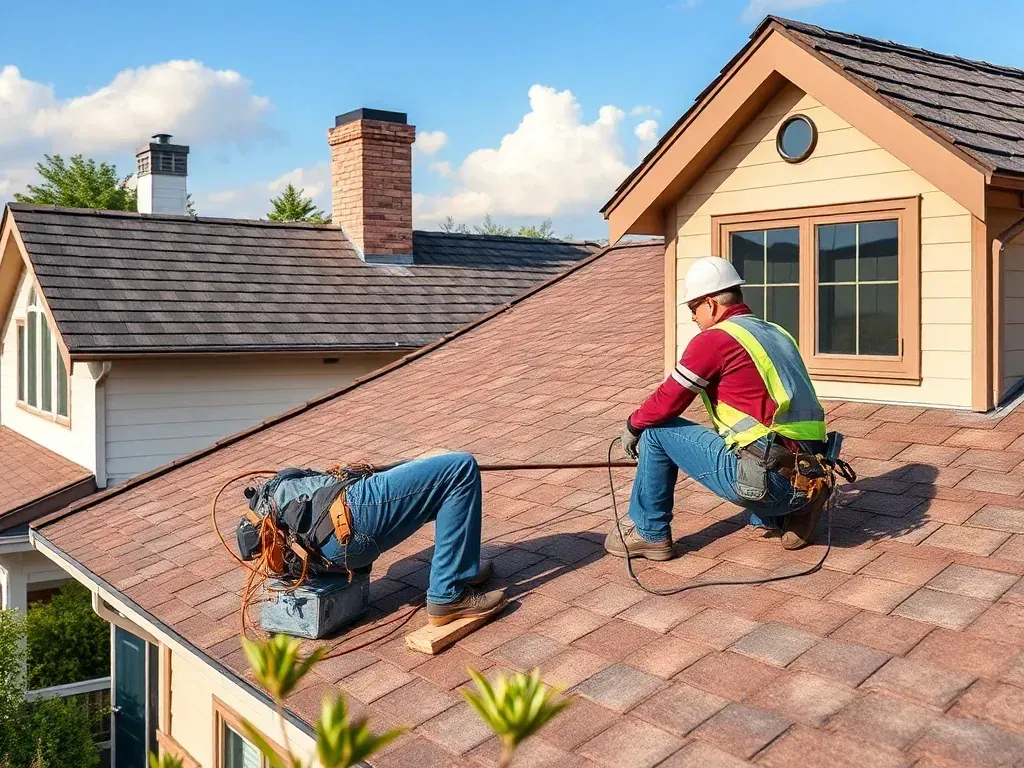
Our crews work off scaffold and ladder with a safety harness on anything steep. We strip old material by hand with a pry bar and roofing shovel rather than tearing up the substrate underneath.
A roofing square, nail gun, and air compressor set every field course. A torch comes out for modified bitumen details, and we keep a dumpster on site so torn-off material never sits in your yard overnight.
Materials We Install After Hail or Wind
Matching what is already on your roof matters as much as the repair itself, because a mismatched patch changes how the roof sheds water and how it ages. These are the systems we work with.
- Asphalt shingles, including three-tab shingle on older homes and architectural shingle for the heavier layered look most Denver roofs now carry.
- Class 4 impact-rated shingles from GAF and Owens Corning, which many insurance carriers recognize and some discount for.
- Wood shake and cedar shake, repaired by hand-splitting replacements to match exposure instead of re-roofing an entire slope.
- Slate, clay tile, and concrete tile, where the fix is usually a matched tile and the right fastener rather than a full tear-off.
- Metal roofing, from a standing-seam panel with concealed clips to a corrugated panel with exposed fasteners.
- Flat systems including TPO, EPDM, PVC membrane, built-up roof, and modified bitumen, chosen by pitch, ponding water, and how the rooftop drains.
- Underlayments, from synthetic underlayment and roofing felt (tar paper) to ice-and-water shield at the eave, the valley, and every low-slope transition.
Under everything goes the right sheet: a self-adhered ice-and-water shield at the eave and valley, then roofing felt or synthetic underlayment across the field.
Penetrations get mastic, roof cement, or a polyurethane sealant and caulk. On a flat rooftop with life left in the membrane, we roll a reflective elastomeric coating instead of tearing it off.
Decking, Ventilation, and the Roofline Details That Leak
Water almost never gets in through the middle of a field. It gets in where one plane meets another, so the details carry the repair.
- Chimney flashing and counter-flashing are rebuilt where the masonry meets the roof, the most common leak path on an older Denver home.
- Step flashing is replaced course by course along sidewalls, and drip edge is reset at the eave and rake so water clears the fascia.
- Valleys are cleared of debris and relined, because a clogged valley backs water under the shingles at the first hard rain.
- Pipe flashing and pipe boot collars are swapped for new ones, and worn vent boots get the same treatment at every stack.
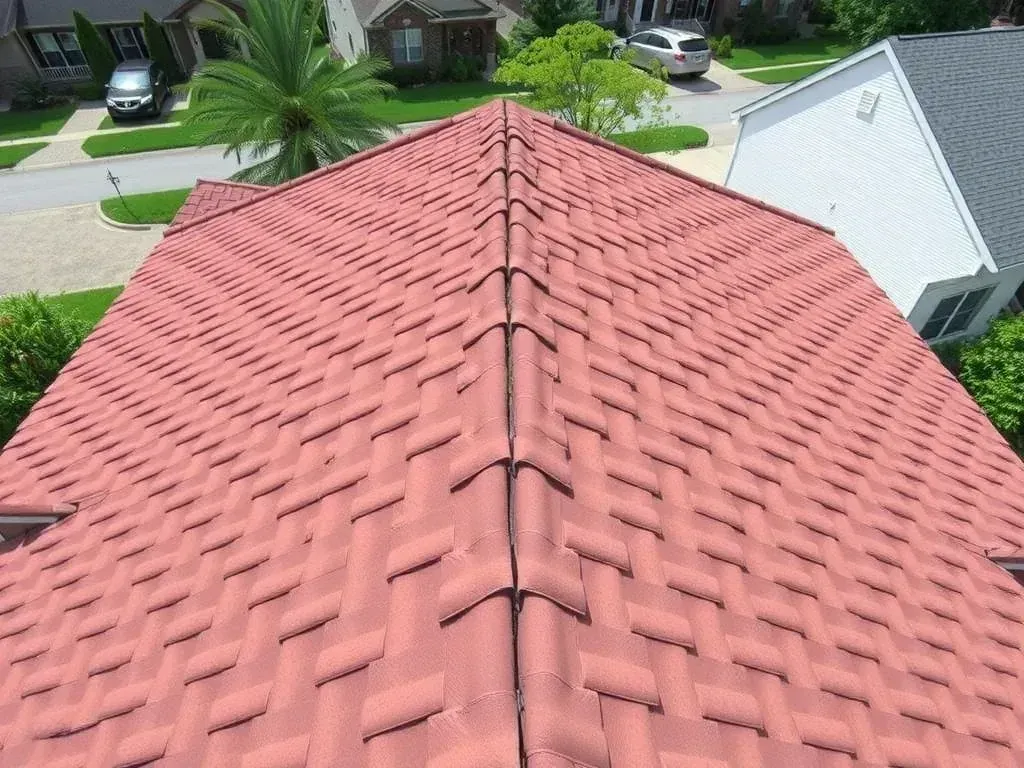
- Ridge cap is replaced along the ridge and hip, and the ridge vent is checked so the attic exhausts heat instead of cooking the shingles from below.
- Soffit vent, intake ventilation, and attic fan function are checked together with insulation, since a hot attic shortens roof life from underneath.
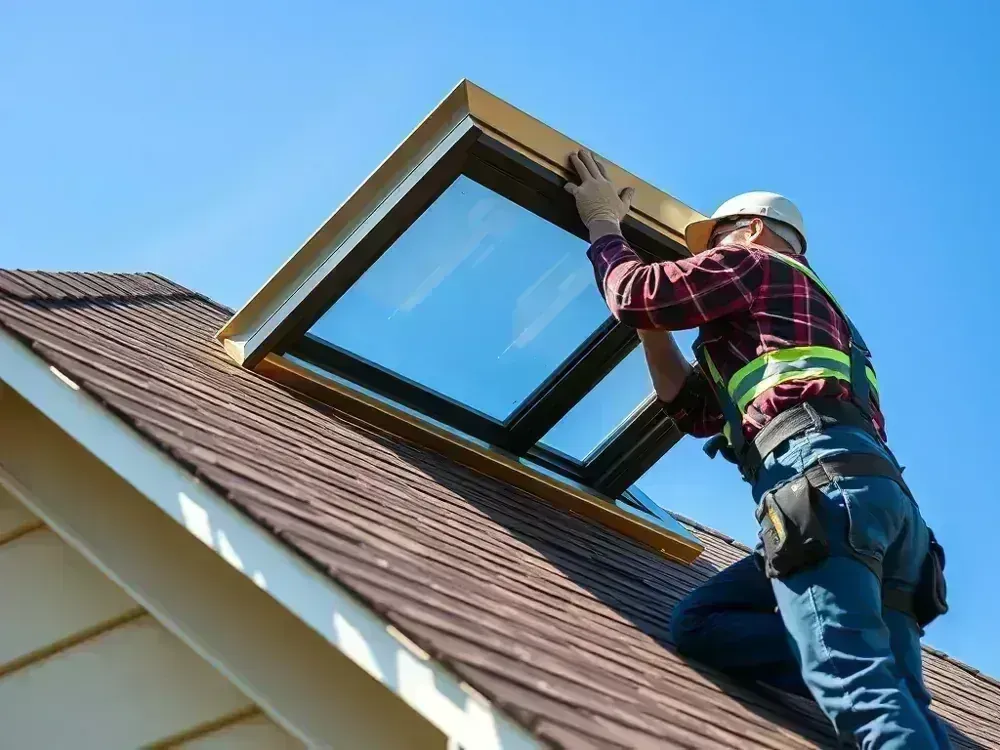
- Skylight, dormer, and parapet details get new flashing, and coping plus scupper repairs keep water moving off a flat rooftop.
Beneath the shingles we inspect the truss, rafter, joist, and ridge beam for rot, and we check purlin and batten framing on older roofs. Where decking has softened, plywood or OSB sheathing gets replaced before anything new goes down.
Roof pitch decides most of this. A steep gable or a mansard sheds water quickly, while a gambrel, canopy, awning, or wide overhang traps debris against the verge.
On reassembly we keep the vapor barrier continuous, bond the ice-and-water shield with its own adhesive, and confirm waterproofing with a hose test on low-slope sections. Counterbatten framing gets checked alongside the substrate, and decking is nailed or screwed to building code with ring-shank fasteners sized to the sheathing. Snow guards and anchor points go back on steep pitches.
Cost Considerations in Denver
Shingle work is priced by the square, which is 100 square feet of finished roof, while flat and commercial systems price by the square foot. Scope moves the number far more than material brand does.
- A small repair, a few replacement shingles plus new sealant, usually lands in the low hundreds, and much of that is setup time.
- Architectural asphalt shingle installed runs roughly $350 to $550 per square, before decking or flashing work is added.
- A partial slope rebuild moves into the low four figures once underlayment, drip edge, and flashing are included.
- A full roof replacement after widespread hail runs several thousand dollars and up, depending on pitch, how many layers must come off, and how much replacement decking is needed.
- Emergency tarping costs far less than most people expect, and it protects the interior while the claim is sorted out.
Warranty and Insurance Claims
Manufacturer warranties on architectural shingles typically run 25 to 50 years on materials, and our own workmanship coverage applies to the installation. Insurance is where most of the money is decided, so we treat the claim like part of the job.
- We photograph and measure the damage the way a carrier expects, in the same line-item format adjusters use to price a scope.
- We meet the adjuster inspection on the roof and point out what gets missed from the ground, including bruised fields and dented soft metal.
- If the first scope comes up short, we file a supplemental claim with the extra evidence rather than asking you to absorb the difference.
- We can help you complete the proof of loss form and track the claim deadline so nothing lapses while you decide.
- If your carrier releases a reserve after the work is finished, we explain what that money covers before you sign anything.
Why Choose Denver Roofing Team for Storm Damage Repair in Denver?
Denver sits at 5,280 feet, and that elevation changes what a roof goes through. UV radiation at this altitude is strong enough to dry out sealant and fade a membrane years ahead of schedule, and freeze-thaw swings in spring push water into every small gap.
Our roofers see the same pattern every June: a cell drops marble-sized hail across a few blocks and skips the rest. Hail season here peaks from May through September, and the 2017 storms caused more than $2 billion in damage across the metro.
We work in Denver County and the surrounding area, licensed and insured, with free estimates. Replacement work usually needs a building permit, and when structural repairs pass half the roof area, code compliance can trigger a full re-roof. We put that in the estimate instead of surprising you later.
Signs You Need Storm Damage Repair
Bruised or Dimpled Shingles
Hail the size of marbles dents the asphalt in a way you cannot see from the driveway. Those bruises crack the shingle mat underneath, and the next freeze-thaw cycle opens them further.
Granules in the Gutters
Granule loss is the fastest way to confirm hail reached your roof. Check the gutter trough and the downspout splash pad for a gritty accumulation after a storm.
Missing or Curled Shingles on Ridges
Wind gets under the starter course at the ridge and hip and peels shingles back. If the roofline looks ragged from the street, the roof deck is likely wet already.
Water Stains on Ceilings
A brown ring on your ceiling means water has wicked past the underlayment and through the insulation. That is an active leak, not a stain to paint over.
Ice Dam Backup at the Eave
Sudden temperature swings let meltwater refreeze at the eave and back up under the shingles. Homes without an ice-and-water shield at the eaves see this first.
Impact Marks on Soft Metal
Dented ridge caps, gutters, downspouts, and vent boots are the evidence carriers accept as proof of hail. We document them alongside the shingle damage.
What's Included
- ✓ Emergency tarping over open sections, usually the same day you call.
- ✓ Board-up for damaged fascia, soffit, or a cracked skylight so the house is closed in again.
- ✓ A photo damage report of every bruised shingle, dented ridge cap, and bent pipe boot, organized for your insurance carrier.
- ✓ A written roof estimate in line-item detail that matches the format adjusters price from.
- ✓ Debris removal and a magnetic nail sweep of the lawn, driveway, and walkways.
- ✓ Dump fees and disposal of all torn-off material, so nothing sits on your property.
- ✓ Follow-up permanent repair or replacement once the claim settles, including permit pull where the work requires one.
Related Services
Ready to get started? Call us today at 7207840657 for a free estimate.
☎ Call 7207840657